
Drowning poses a significant risk to young children but it is preventable. As per the U.S Centers for Disease Control and Prevention, drowning stands as the primary cause of death among children aged one to four.
In order to help parents fully understand the importance of pool and water safety, Life Saver Pool Fence of South Carolina is sharing the following pool and water safety tips:
Distractions make for tragedies – Parents are cautioned all the time about water safety, but drownings still occur. Always be aware and be in the present moment with your children. Never leave your child alone; if you have to leave, take your child with you. [Source: NSC.org]
Make sure everyone follows the Pool Rules – Teach your kids and all caregivers these pool rules:
- Do not run around the pool.
- No pushing or dunking in the pool.
- Never dive from the side of the pool or a diving board unless a pool is at least 9 feet deep. If the depth isn’t posted, don’t dive!
- Get out of the pool right away in bad weather, especially if there's lightning.
Additionally:
- Do not let kids use mermaid tails or fins in the pool. They can make it hard to swim and lead to drowning.
- Floaties do not prevent drowning. Kids who wear them still need the same supervision as those without them.
[Source: KidsHealth.org]
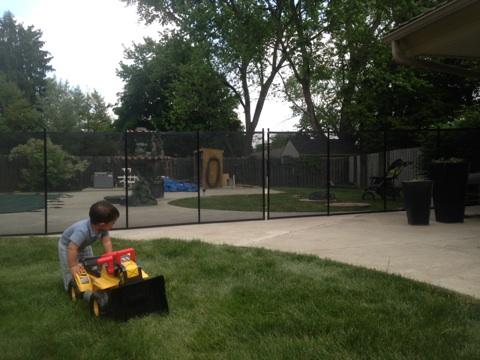
Put in a pool fence – install a mesh pool fence, a pool barrier that will isolate young children and pets from your pool area. Make sure it completely surrounds your pool. If you install a pool gate, use a self-closing, self-latching gate so that the gate always swings shut 100% of the time. [Source: Life Saver Pool Fence]
Never leave furniture near the fence that would enable a child to climb over the fence. [Source: NYC.gov]
Remove toys from the pool area when the pool is not in use. Toys can attract young children into the pool. Completely remove the pool cover before using the pool. If a child is missing, check the pool first. [Source: NYC.gov]
Do not rely on the use of water wings, swim rings, inflatable toys or other items designed for water recreation to replace adult supervision. [Source: Redcross.org]
Wear a Life Jacket – Have young children or inexperienced swimmers wear U.S. Coast Guard-approved life jackets around water, but do not rely on life jackets alone. [Source: Redcross.org]
Keep basic lifesaving equipment (a pole, rope and personal flotation devices) by the pool and know how to use them. [Source: NYC.gov]
Know the signs of drowning – The phrase “dry drowning” refers to a series of delayed symptoms that a person may experience after a water-related incident or submersion injury. While the phrase describes real complications that may require medical treatment, it is important to note that dry drowning is not a recognized medical condition or scientific term.
What is Dry Drowning?
Drowning is the process of experiencing respiratory impairment (essentially trouble breathing) due to water in the airway and lungs.2 “Dry drowning,” on the other hand, refers to complications that can arise after a person takes in water through their nose and/or mouth, but not into their lungs, causing a spasm that closes the airway.
Dry drowning usually happens soon after exiting the water. Research has shown that “dry drowning” has been observed during autopsy in 10% to 15% of drowning cases where people died after experiencing laryngospasm, which is when water touches the upper airways and triggers spasms leading to cardiac arrest.
[Source: Parents Magazine Autopsy Findings: Drowning and Submersion Deaths. Encyclopedia of Forensic and Legal Medicine (Second Edition). 2016.]
Know any amount of water can be a risk – A child can drown in less than 2 inches of water. Even the teensiest wading pool requires constant supervision and should be drained and placed well out of reach when it's not being used.
And as tempting as those large, inflatable pools look in the store, they often hold thousands of gallons of water that can't easily be drained. In fact, they have become a particular threat: A study published in Pediatrics found they pose a significant risk, especially among children under 5.6 If you do have one, surround it with a fence, cover it when not in use, and remove the steps or ladder once swim time is over.
[Source: Parents.com]
Make sure your pool is up to code – A pool inspector who is credentialed by the National Swimming Pool Foundation or the Association of Pool and Spa Professionals should be able to tell you if the pool itself or the surrounding deck material is cracked, damaged, or dangerous. You also can try finding a code official by contacting your local building or health department. [Source: Realtor.com]
Pool drain safety
- Keep children away from pool drains and ensure that they are properly covered to prevent entrapment. [Source: CPSC.gov]
- Ensure all pools and spas have VGB-compliant drain covers [Source: poolsafely.gov]
- New, safer drains are designed to be curved so that they can never be fully blocked by a body part. Parents should always confirm with pool and spa owners that they are using anti-entrapment drain covers before allowing children to get in the water. [Source: poolsafely.gov]
Do not let children play or swim near drains or suction outlets, especially in spas and shallow pools, and never enter a pool or spa that has a loose, broken or missing drain cover. Children’s hair, limbs, jewelry or bathing suits can get stuck in a drain or suction opening. When using a spa, be sure to locate the emergency vacuum shutoff before getting in the water.
Ensure all pools and spas have compliant drain covers. Virginia Graeme Baker, after whom the Pool and Spa Safety Act is named, died from drowning due to a suction entrapment from a faulty drain cover. All public pools and spas must have drain grates or covers that meet safety standards to avoid incidents like the one that took Graeme’s life. Powerful suction from a pool or spa drain can even trap an adult.
[Source: PoolSafely.gov]
Keep pool water clean and balanced – You or your local pool service company should keep the water in your pool sanitary, balanced, and debris-free. If you have an automatic pool cleaner, remove it when you and your kids are swimming. Otherwise, the operating hoses could entangle swimmers. [Source: Angie’s List]
Restrict access to chemicals and equipment – If you service your own pool, lock up chemicals as a childproofing safeguard. Make sure the heater, filter, and other equipment are behind a fence or wall that’s at least 5 feet high. [Source: Angie’s List]
Add shade to cut down on sunburns – Install awnings and invest in shade umbrellas. Make sure kids wear sunscreen and encourage them to take breaks for water and snacks. [Source: Angie’s List]
Make the pool the first place you check if children are missing – or any nearby body of water such as a pond, canal, waterway, the ocean etc. [Source: Life Saver Pool Fence]
Install pool alarms and door locks on any doors leading to the backyard. [Source: Life Saver Pool Fence]
Provide your children with early infant swim instruction. [Source: Life Saver Pool Fence]
Teach children how to swim. Swimming is not only fun, it’s a lifesaving skill. Enroll children in swimming lessons; there are many free or reduced-cost options available from your local YMCA, USA Swimming chapter or Parks and Recreation Department. [Source: PoolSafely.gov]
Educate family members, caretakers, and babysitters on pool safety. [Source: Life Saver Pool Fence]
Supervise children at all times and always have designated a water watcher on “duty.” [Source: Life Saver Pool Fence]
Always watch children in or near water, never leave them unattended. Designate an official Water Watcher, an adult tasked with supervising children in the water. That should be their only task – they shouldn’t be reading, texting or playing games on their phone. Have a phone close by at all times in case you need to call for help, and if a child is missing, check the pool first. [Source: PoolSafely.gov]
Require that any and all caretakers know how to perform CPR. [Source: Life Saver Pool Fence]
Get Certified: Know how to perform CPR on children and adults. Often, bystanders are the first to aid a drowning victim, so learning CPR can help save a life. And once you’re CPR certified, make sure to keep your certification current. CPR classes are available through many hospitals, community centers, or by contacting the American Red Cross. [Source: PoolSafely.gov]
Completely remove the pool cover before using the pool. [Source: NYC.gov]
If a child is missing, check the pool first. Go to the edge of the pool and scan the entire pool — bottom and surface — as well as the surrounding pool area. [Source: NYC.gov]